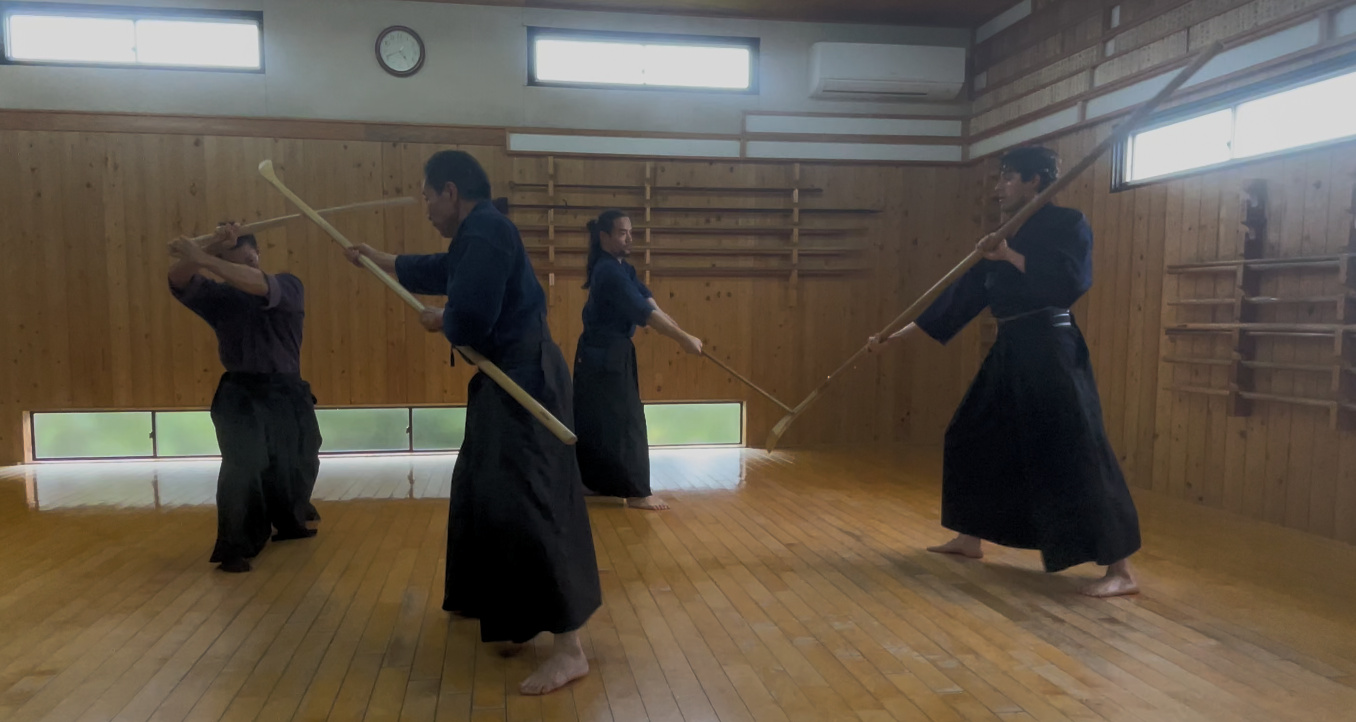
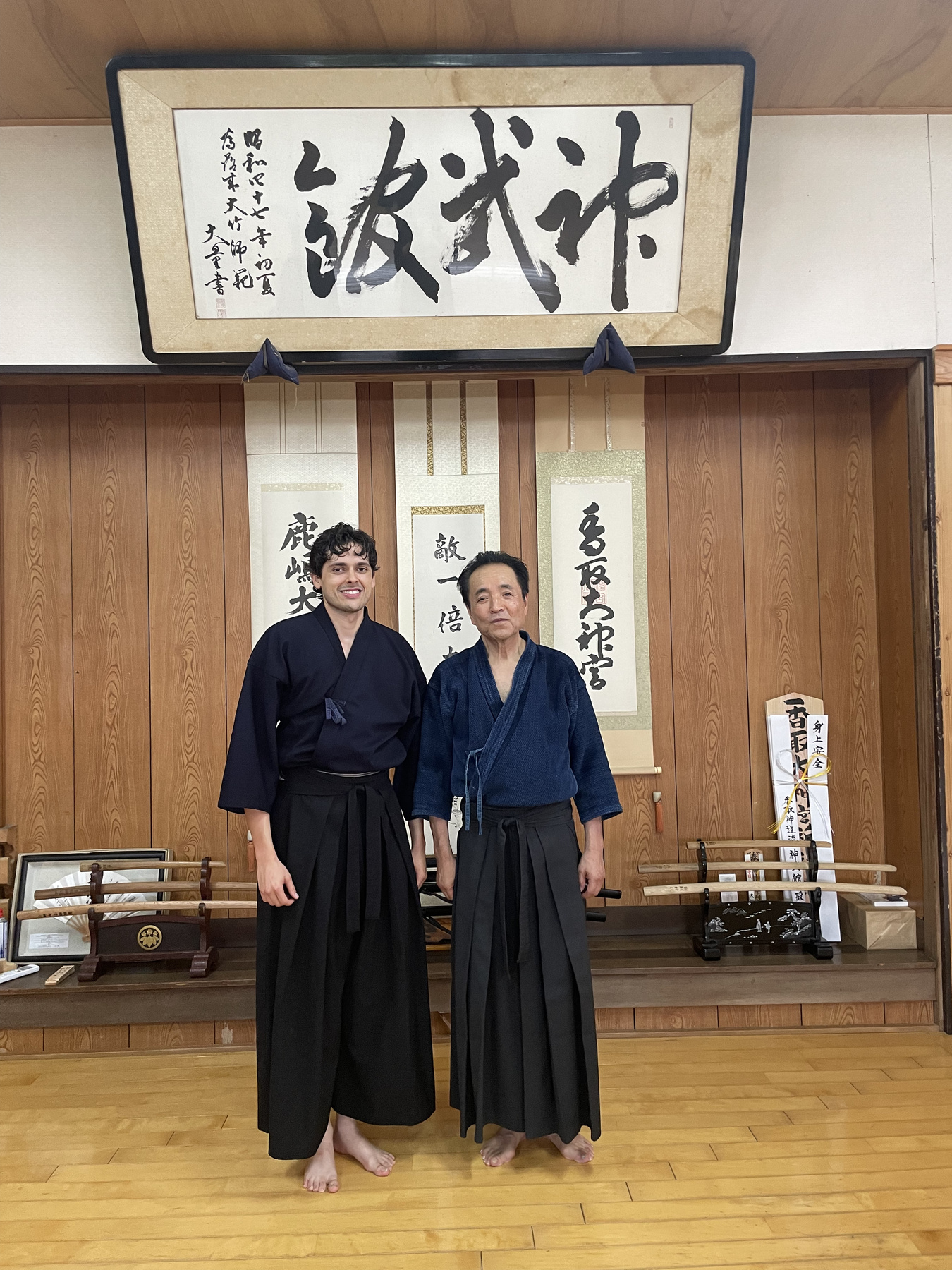
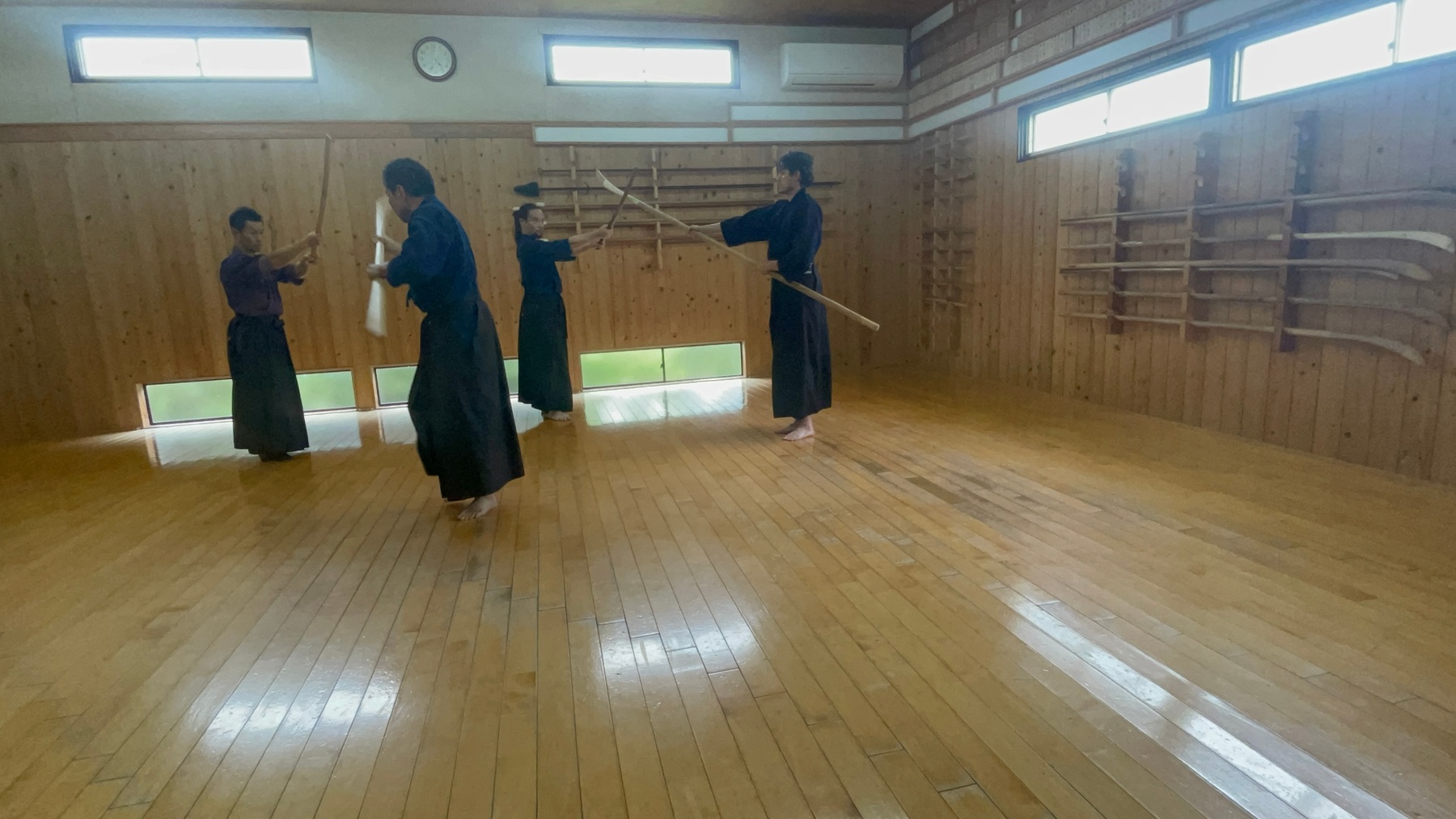
Tenshin Shoden Katori Shinto-Ryu Shinbukan is dedicated to preserving and transmitting one of Japan's oldest classical martial traditions, founded during the Muromachi period by Iizasa Choisai Ienao. Training emphasizes precise body alignment, timing, distancing, formal etiquette, strategy, and paired kata through classical weapons practice, including kenjutsu, iaijutsu, bojutsu, naginatajutsu, sojutsu, and other traditional methods.
The Shinbukan tradition links students to a serious path of classical bujutsu, where technical precision, discipline, character development, and cultural preservation are central to the training. Through structured practice and careful instruction, students develop focus, control, awareness, and respect for the depth of traditional Japanese martial arts.
What is Katori Shinto-Ryu?
Tenshin Shoden Katori Shinto-Ryu is one of the oldest surviving Japanese martial traditions. It is a complete classical system centered on the sword, and also includes the staff, spear, naginata and other weapons.
Training is done through paired kata that preserve battlefield strategy, timing and movement from centuries ago.
History and lineage
The school was founded by Iizasa Ienao in the fifteenth century near the Katori Shrine in present-day Chiba Prefecture. It has been passed down through the Iizasa family for many generations.
Katori Shinto-Ryu is regarded as a source tradition for many later Japanese schools and was designated an intangible cultural asset in Japan. The Shinbukan line continues its teachings internationally.
What a class looks like
Class starts with etiquette and basic cuts, then moves to paired kata with wooden weapons. Students work slowly and precisely at first, gradually increasing speed and intensity as their timing and control improve.
Who it's for
This art is for people deeply interested in classical Japanese culture, swordsmanship and history, and for practitioners who value patient, long-term study.
FAQ
How old is Katori Shinto-Ryu?
Katori Shinto-Ryu dates back to the fifteenth century, making it more than 500 years old.
Do you train with real swords?
No, students train with wooden weapons (bokken and others) for safety during paired kata.