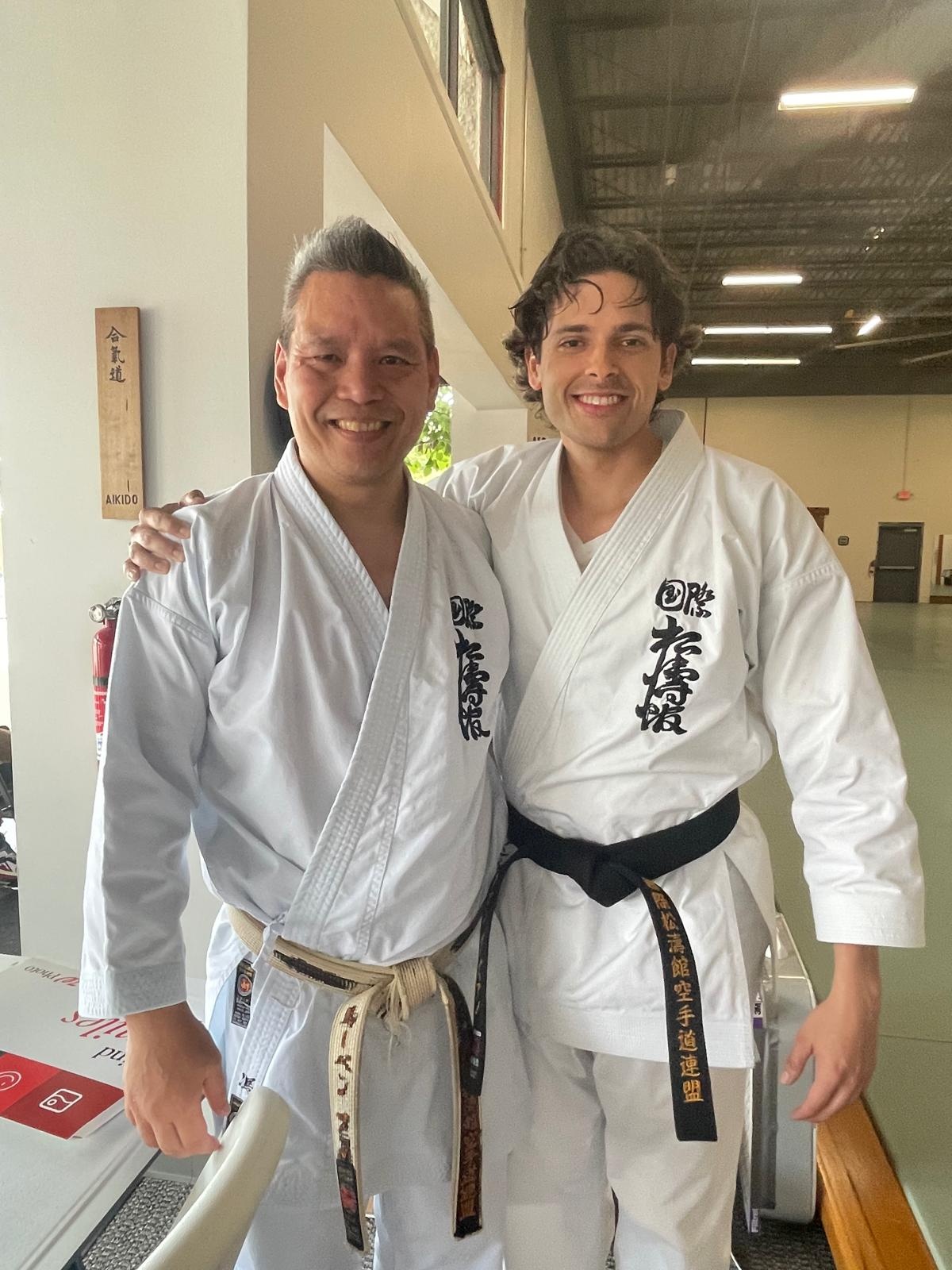
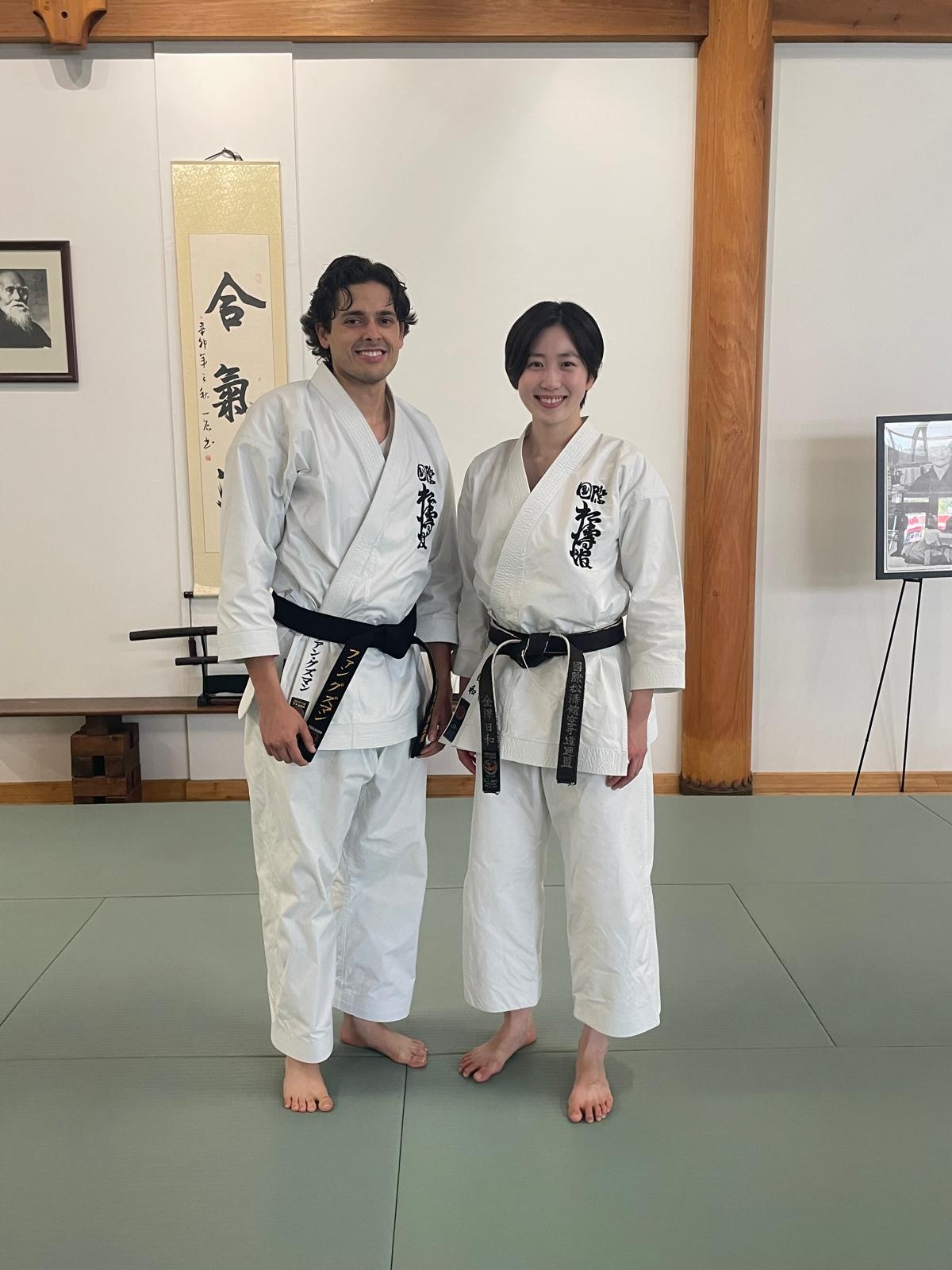
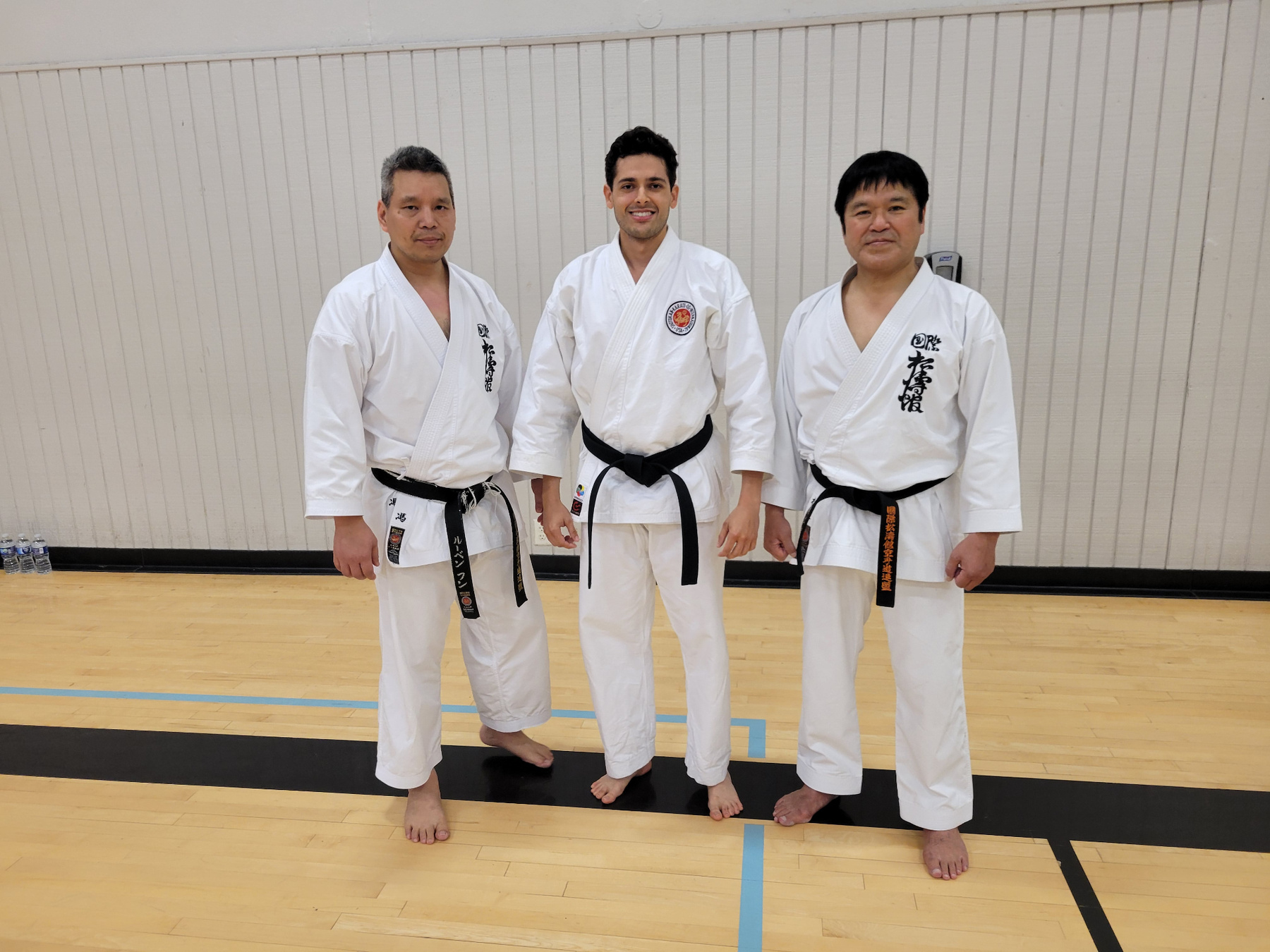
Shotokan Karate-Do International Federation is dedicated to the study and transmission of Shotokan Karate-Do under the legacy of Kanazawa Hirokazu, one of the most influential Shotokan masters of the modern era. Training emphasizes strong fundamentals, powerful linear techniques, deep stances, hip rotation, breathing, timing, distance, kata, kumite, and the smooth integration of body mechanics. Students develop reliable skills through kihon, kata, sparring, and structured technical practice guided by traditional etiquette and modern safety standards.
Kanazawa's approach to Shotokan is known for combining power with fluidity, precision, relaxation, and natural movement. The SKIF tradition provides a complete path for students seeking strong karate technique, character development, physical conditioning, and deeper martial understanding through disciplined training, technical refinement, and lifelong practice.
What is Shotokan Karate-Do?
Shotokan is one of the most widely practiced karate styles in the world. It is known for deep, stable stances, long linear techniques and powerful focused strikes delivered with full-body commitment (kime).
Training is built on three pillars: kihon (basics), kata (forms) and kumite (sparring). Each reinforces the others, so a student’s punch in basics, in kata and in sparring is the same technique.
History and lineage
Shotokan traces back to Gichin Funakoshi, an Okinawan teacher who introduced karate to mainland Japan in 1922. "Shoto" was Funakoshi’s pen name, and Shotokan, "Shoto’s hall," was the name of his dojo in Tokyo.
His son Yoshitaka (Gigo) Funakoshi developed the lower stances and dynamic kicks the style is known for. Later organizations such as the Shotokan Karate-Do International Federation (SKIF), founded by Hirokazu Kanazawa, carried the style worldwide.
What a class looks like
A class usually starts with a formal bow and warm-up, then moves to lines of kihon practiced up and down the floor. The middle of class is dedicated to kata such as the Heian series, and the session ends with structured kumite drills, from prearranged five-step sparring to freer exchanges as students advance.
Who it's for
Shotokan is ideal for people who like clear structure, measurable progress through belt ranks, and a demanding athletic workout. It is a strong foundation for anyone interested in competition karate as well as for those who train purely for fitness and discipline.
FAQ
Is Shotokan good for beginners?
Yes, Shotokan is very beginner-friendly because its curriculum is highly structured and starts with simple, repeatable fundamentals.
Is Shotokan effective for self-defense?
Yes, Shotokan teaches strong, committed strikes and distance control that are useful in self-defense, especially when combined with its bunkai (kata application) training.