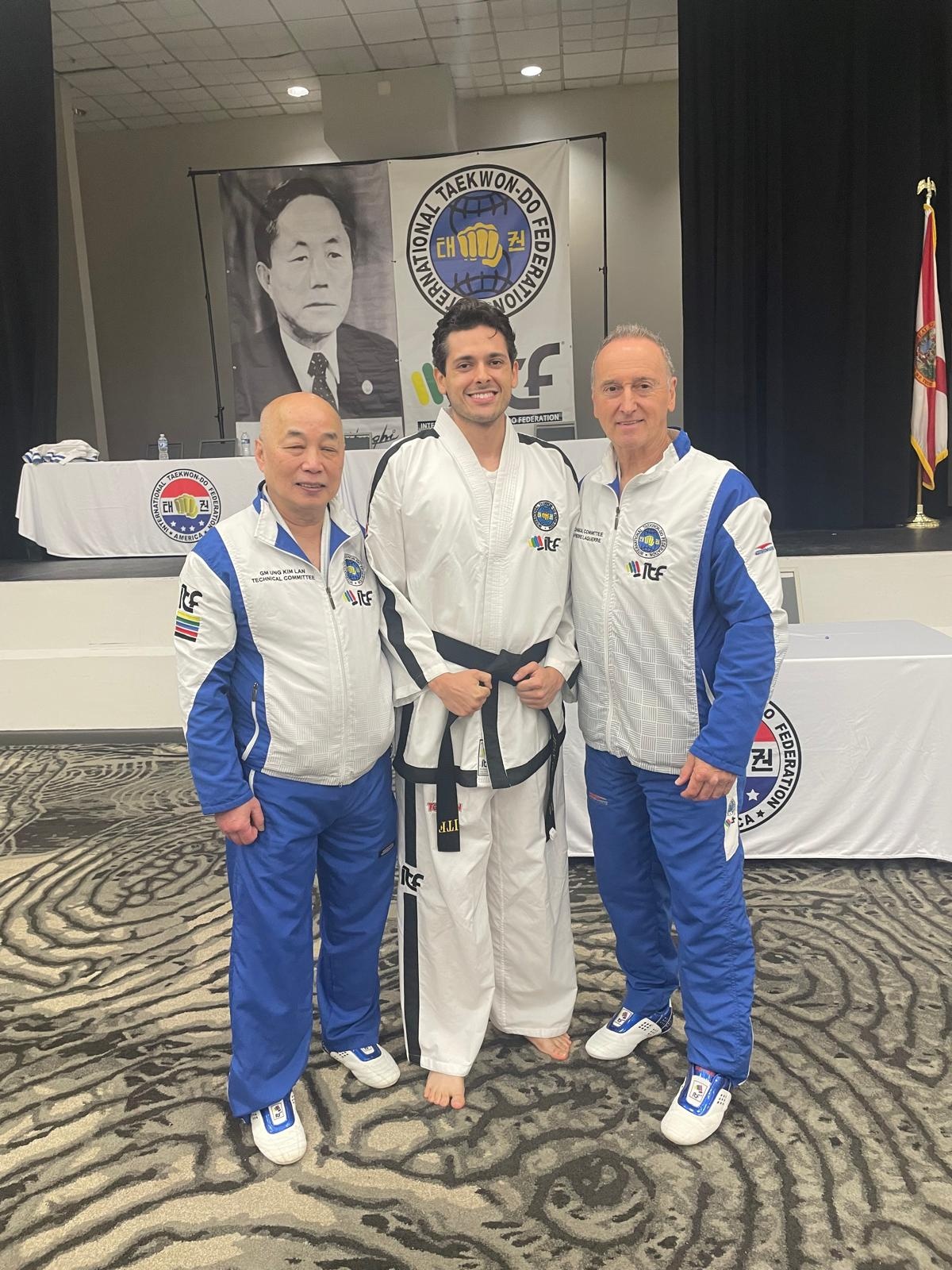
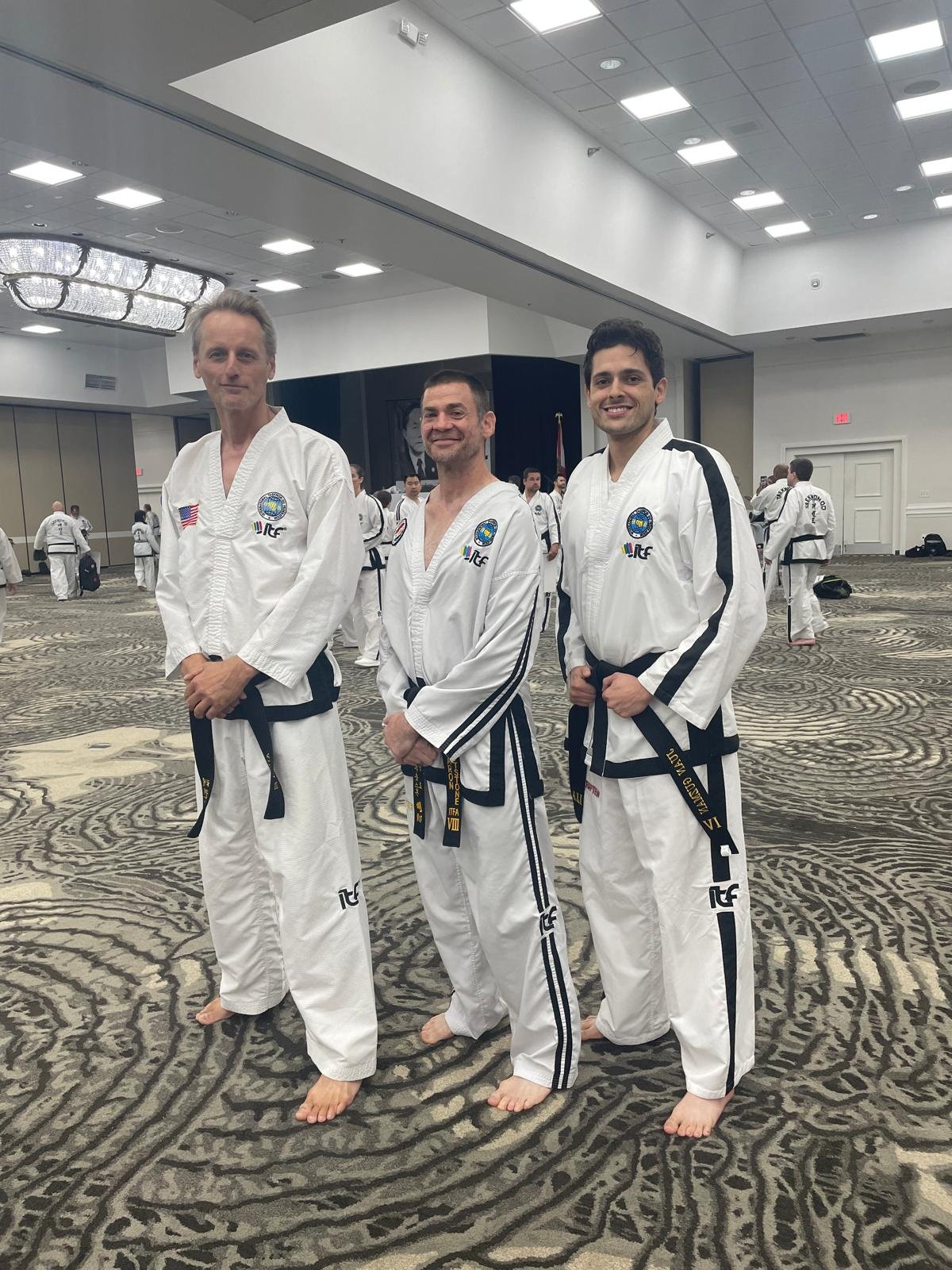
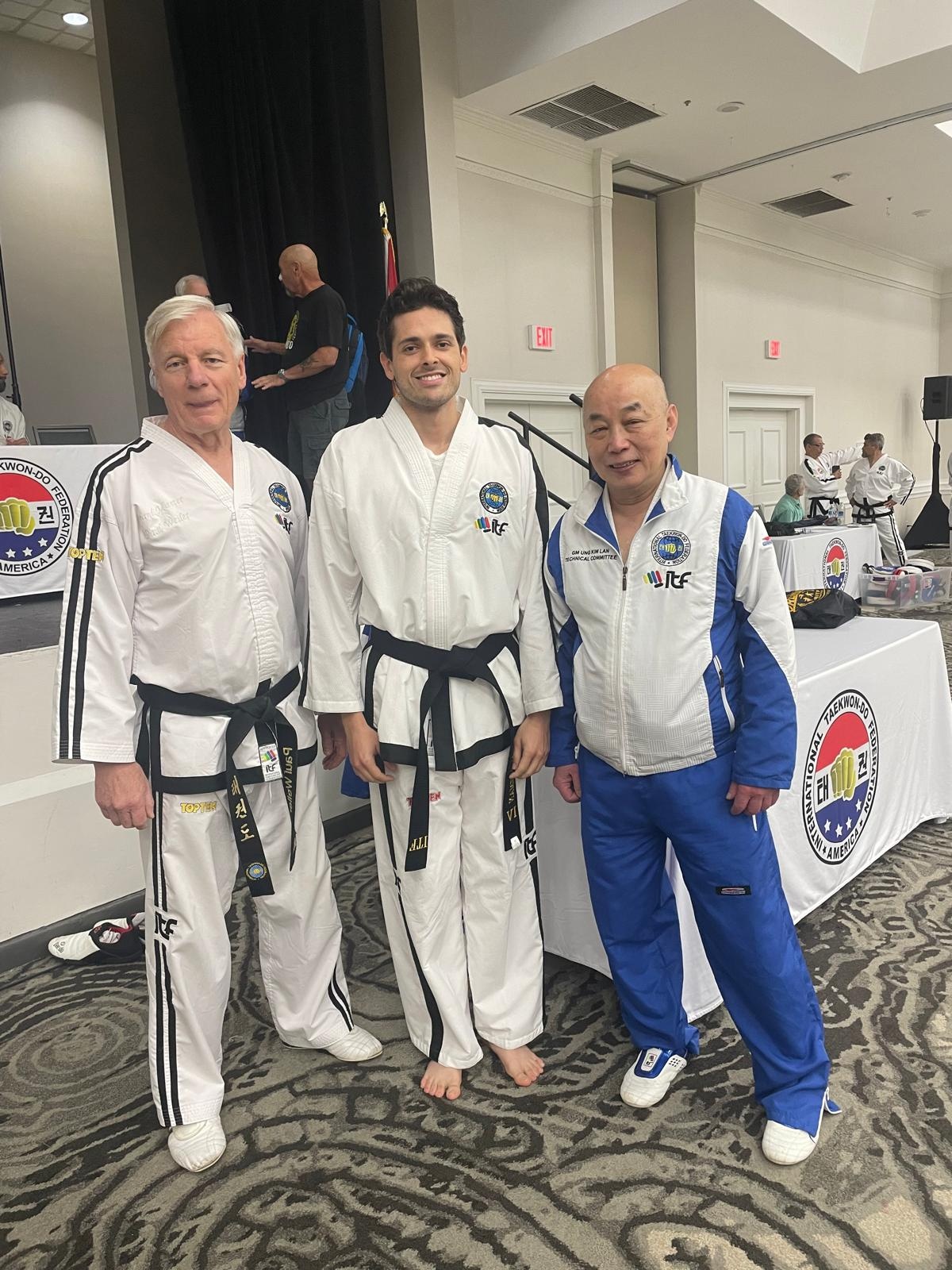
ITF Taekwon-Do is a traditional Korean martial art founded in 1955 by General Choi Hong Hi. It combines dynamic kicks, powerful hand techniques, and scientifically developed principles such as the sine wave motion and reaction force to maximize effectiveness. Training includes patterns (tul), sparring, self-defense techniques, and board breaking, all designed to build coordination, strength, and control. The art is systematic, with clearly defined ranks and progression through a series of technical requirements.
Beyond physical training, ITF Taekwon-Do emphasizes the development of moral character through its Tenets — Courtesy, Integrity, Perseverance, Self-Control, and Indomitable Spirit. Practitioners are encouraged to live by these principles in and out of the dojang. It is not just a martial art for self-defense or fitness, but a lifelong path of personal growth, cultural appreciation, and mental discipline.
What is ITF Taekwon-Do?
ITF Taekwon-Do is the traditional style of Taekwon-Do of the International Taekwon-Do Federation. It is known for its powerful hand and foot techniques, its 24 patterns (tul), and its "sine wave" motion for generating power.
Training covers patterns, sparring, self-defense and breaking.
History and lineage
Taekwon-Do was developed in Korea after the Second World War. General Choi Hong Hi is credited with naming it in 1955 and founded the International Taekwon-Do Federation in 1966.
The ITF spread the art worldwide, and its patterns are named after important figures and events in Korean history.
What a class looks like
Class includes warm-ups and stretching, fundamental movements, patterns, step-sparring and, for advanced students, free sparring. Many classes also include self-defense drills and theory.
Who it's for
ITF Taekwon-Do suits people who want a dynamic workout, improved flexibility and kicking skill, and a traditional art with clear grading.
FAQ
What is the difference between ITF and WT Taekwon-Do?
ITF focuses on traditional patterns, hand techniques and semi-contact sparring, while WT focuses on Olympic-style full-contact sparring with an emphasis on kicks.
Is ITF Taekwon-Do good for self-defense?
Yes, ITF Taekwon-Do includes self-defense techniques, powerful strikes and sparring that build practical skills.