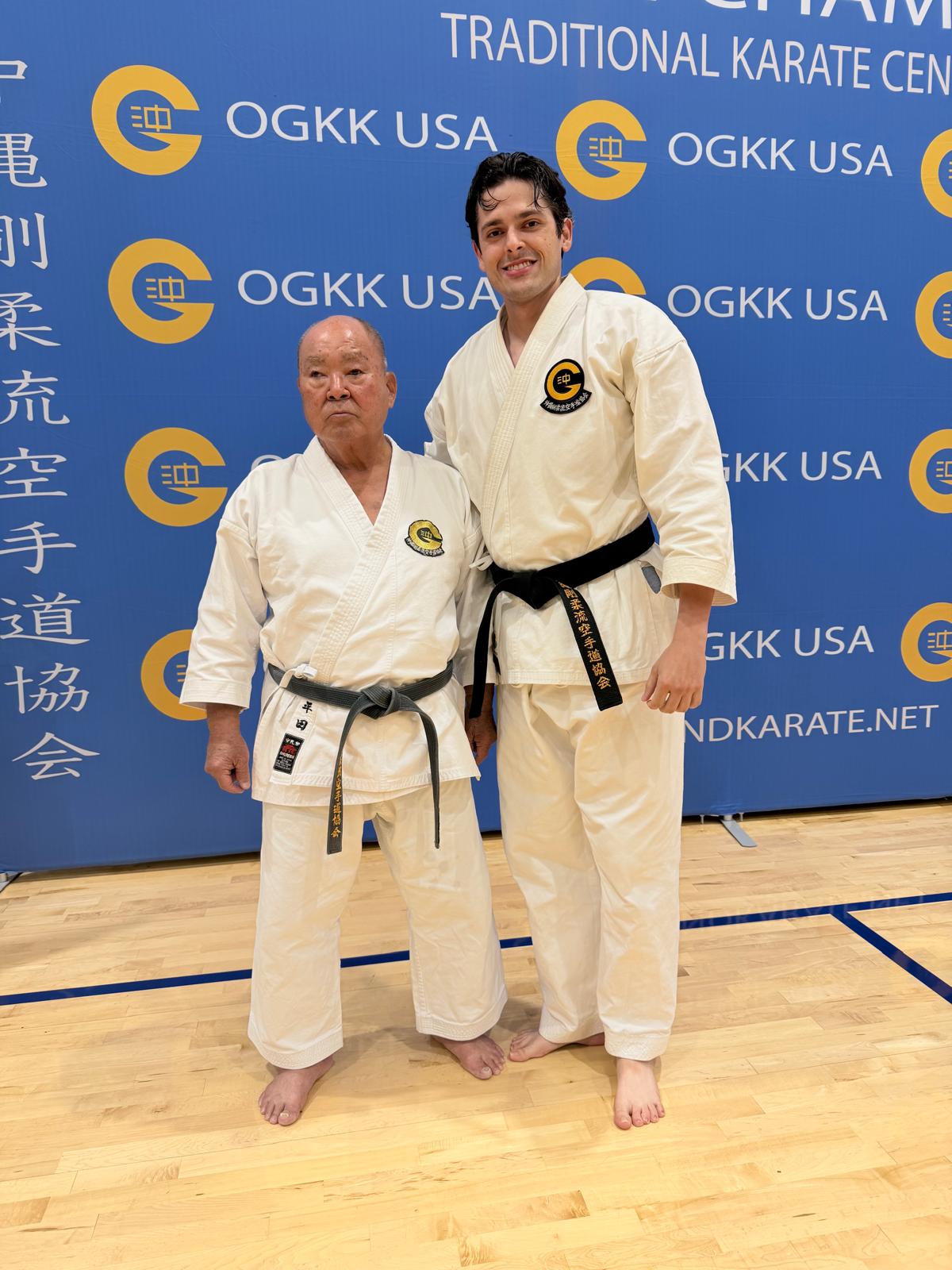
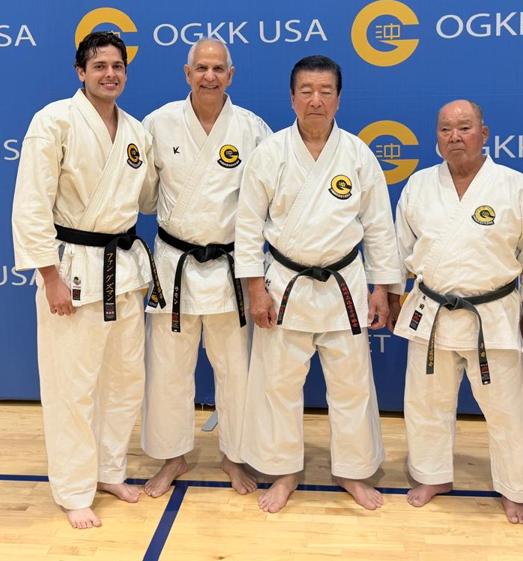
Okinawa Goju-Ryu Karate-Do Kyokai is a traditional martial art that originated on the island of Okinawa, Japan. As one of the oldest and most respected karate styles, Goju-Ryu (剛柔流) translates to "Hard-Soft Style," emphasizing a unique combination of hard (linear, striking) and soft (circular, deflecting) techniques. This balance between strength and flexibility reflects the philosophy of harmony and adaptability central to Goju-Ryu practice.
Goju-Ryu was formalized by Chojun Miyagi in the early 20th century, but its roots trace back to Chinese martial arts, particularly White Crane and other Southern Kung Fu styles. Miyagi adapted these influences into a practical system of self-defense and personal development, combining traditional Okinawan techniques with rigorous breathing exercises and forms (kata). The style has since grown into a global tradition, with the Kyokai (Association) established to preserve and promote authentic Goju-Ryu training worldwide.
What is Goju-Ryu Karate-Do?
Goju-Ryu is an Okinawan karate style whose name means "hard-soft style." It blends powerful, rooted strikes with circular blocks, trapping and close-range grappling, all driven by deliberate breathing.
Two kata sit at the heart of the system: Sanchin, which builds structure and breath control, and Tensho, which develops soft, flowing hand movement. Together they teach students to switch between tension and relaxation at will.
History and lineage
Goju-Ryu was founded by Chojun Miyagi in the early twentieth century. Miyagi studied under Kanryo Higaonna, who had trained in Fuzhou, China, and brought Naha-te back to Okinawa.
Miyagi formally named the style Goju-Ryu in the 1930s, taking the name from a line of the Bubishi: "the way of inhaling and exhaling is hardness and softness." His students spread the art across Okinawa, mainland Japan and eventually the world.
What a class looks like
A typical class opens with junbi undo, the traditional Goju-Ryu warm-up, followed by basics such as stances, blocks and strikes. Students then practice kata, starting with Sanchin breathing, and finish with partner drills like kakie (sticky hands) and bunkai, which shows how each kata movement applies against an attacker.
Who it's for
Goju-Ryu suits adults who want practical close-range self-defense, people who enjoy a strong physical workout, and anyone interested in breath control and conditioning. Beginners with no experience are welcome; the system builds strength gradually.
FAQ
Is Goju-Ryu good for self-defense?
Yes, Goju-Ryu is well suited to self-defense because it focuses on close-range striking, trapping, joint manipulation and balance-breaking, which is where most real confrontations happen.
What does Goju-Ryu mean?
Goju-Ryu means "hard-soft style," referring to the combination of strong, linear techniques with soft, circular ones.